Medically reviewed by Lisa Guidry Pruett, MD, FAAD, board-certified dermatologist
The weather is finally starting to feel like fall in Dallas, and that is usually when the effects of a long North Texas summer start to show up on skin. Months of sun and heat leave behind brown spots, uneven tone, redness, and rough texture that sunscreen alone can’t reverse.
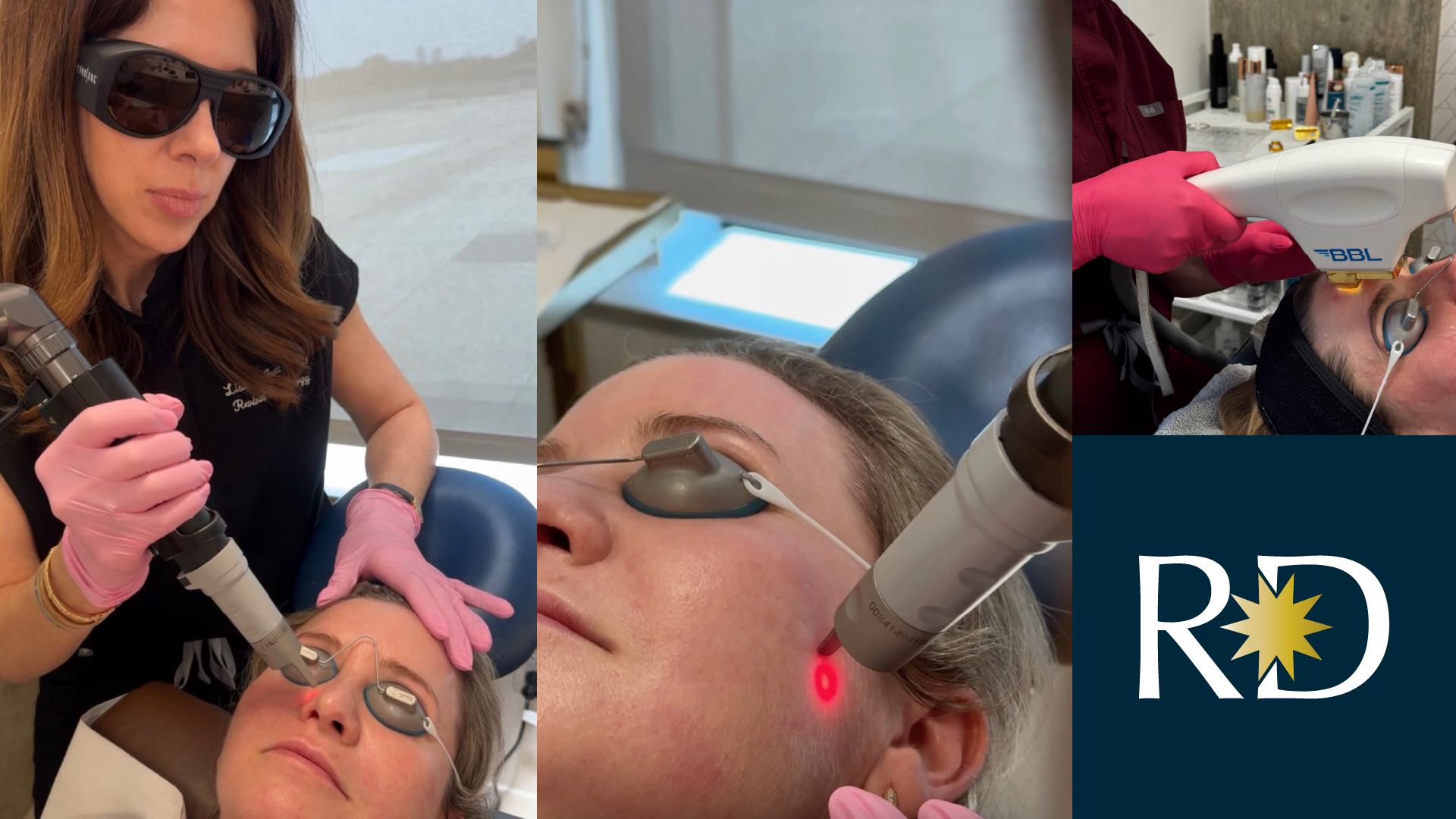
For dermatologists, this is laser season. Cooler months mean less sun exposure, which makes it easier for skin to heal after treatment and lowers the risk of new pigment forming while it recovers.
What Summer Leaves Behind
Sun exposure speeds up visible aging and can trigger or darken pigment. The most common concerns patients notice after summer include:
Sun exposure speeds up visible aging and can trigger or darken pigment. The most common concerns patients notice after summer include:
- Brown spots, sun spots, and freckling
- Melasma flare-ups melasma sun protection
- Redness, rosacea, and broken capillaries
- Rough texture, enlarged pores, and fine lines
- Acne scarring that looks more noticeable as tone becomes uneven
- Rough, scaly patches that may be actinic keratosis, a precancerous lesion actinic keratosis
Revival Dermatology recommends making laser treatment part of an annual skin care routine once these signs start to appear. A fall treatment or series addresses the past season’s damage before it builds up year over year. Any new or changing spot should be evaluated by a dermatologist before it is treated.
How Revival Chooses Its Laser Technology
Revival Dermatology selects laser and light devices with proven clinical results for the concerns its Dallas patients bring in most. The practice keeps a full range of options, from gentle photofacials to deep resurfacing, so treatment can be matched to each patient’s skin type, goals, and the amount of downtime they can take.
That range also makes combination treatment possible. BBL is often paired with Halo or Ultra when both tone and texture need work, for example.
Seeing the Damage With Aura 3D Imaging
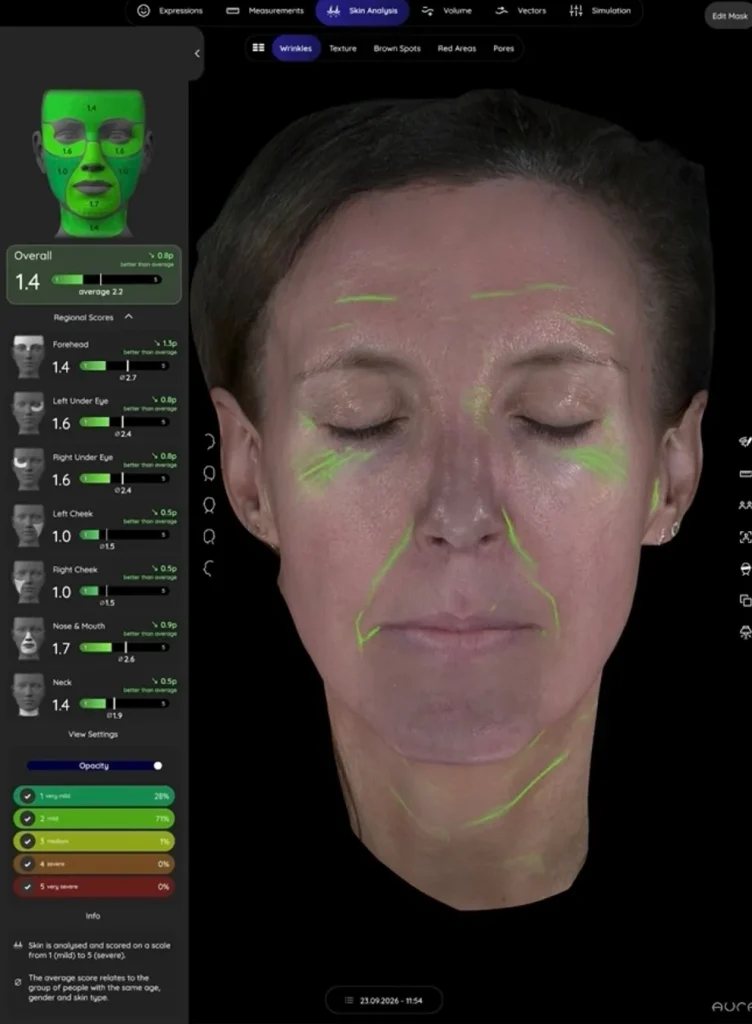
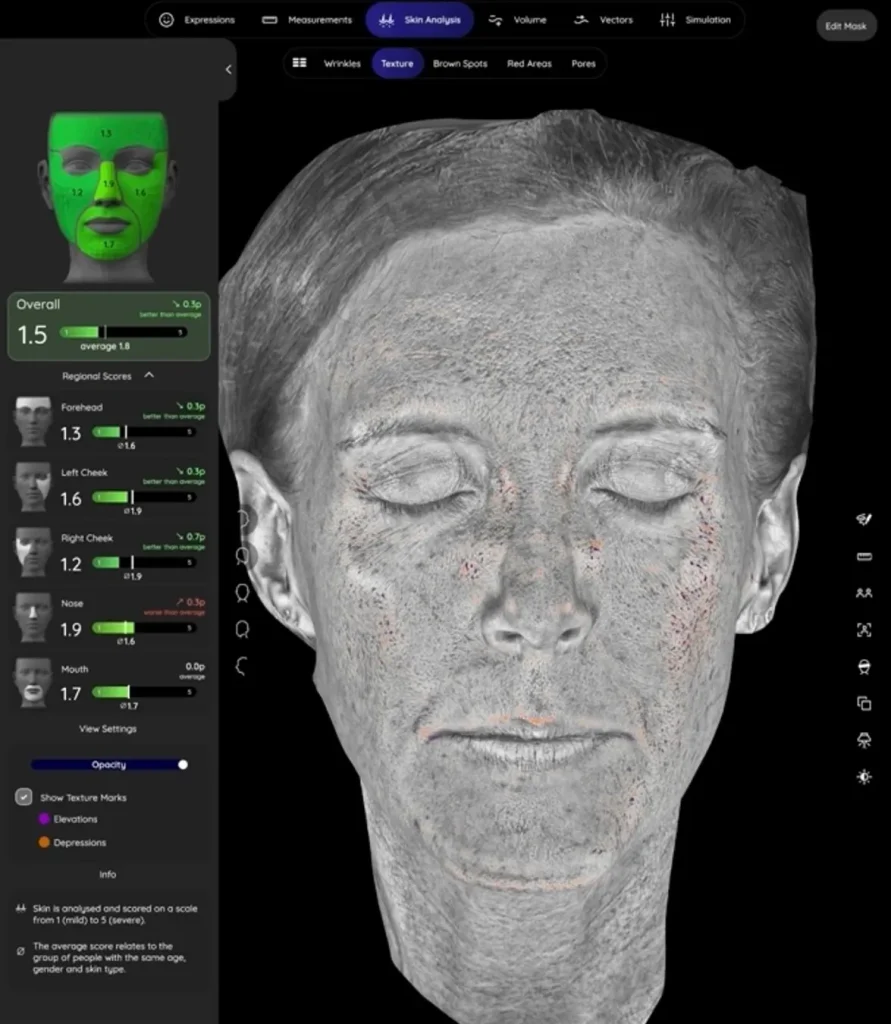
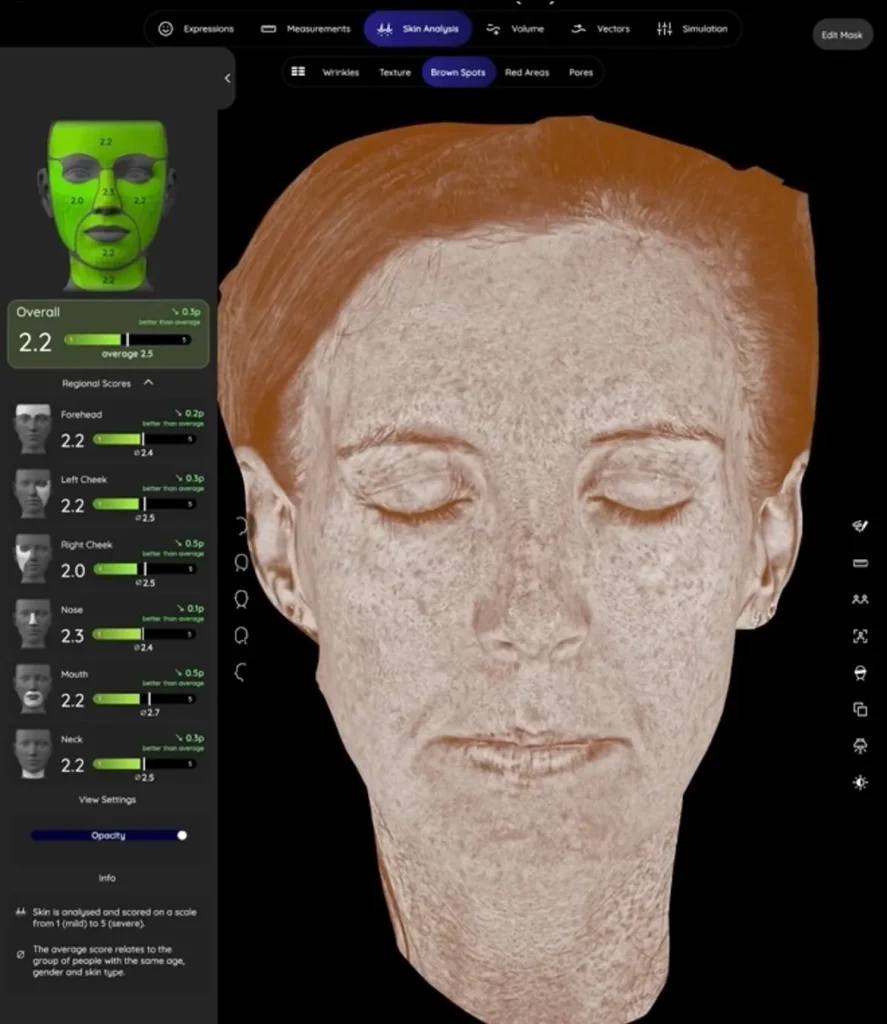
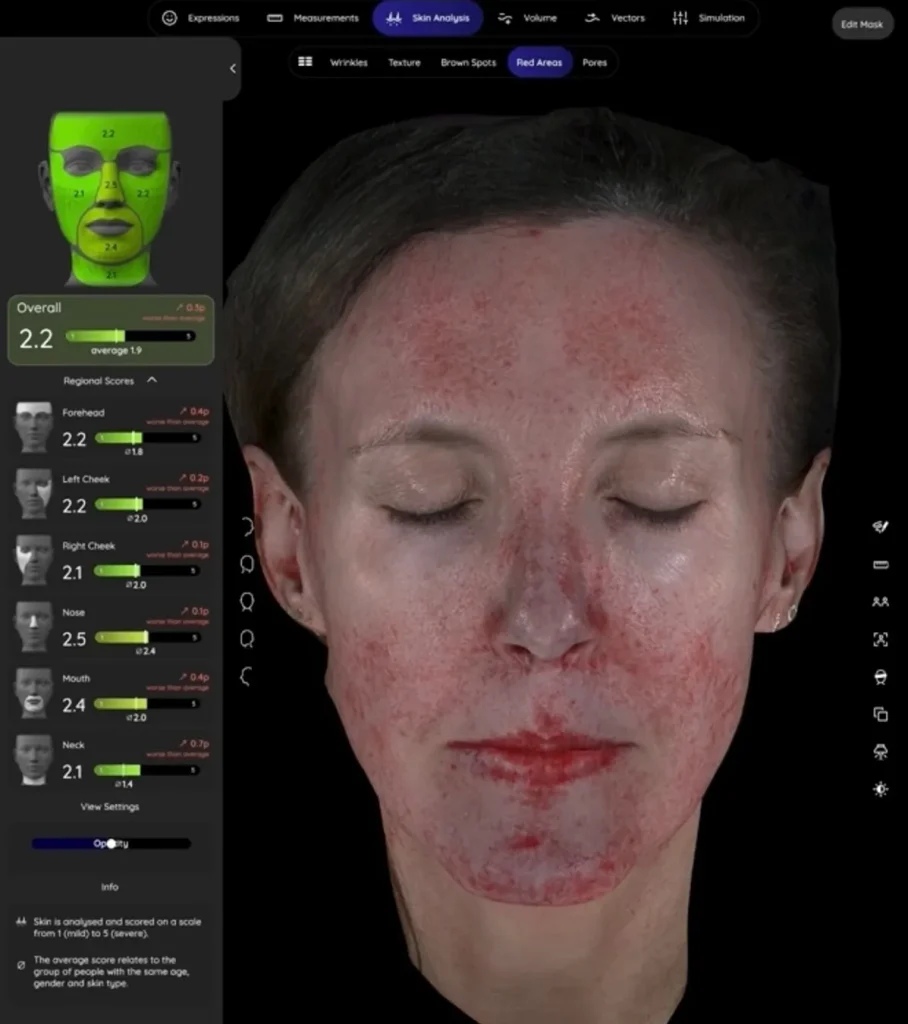
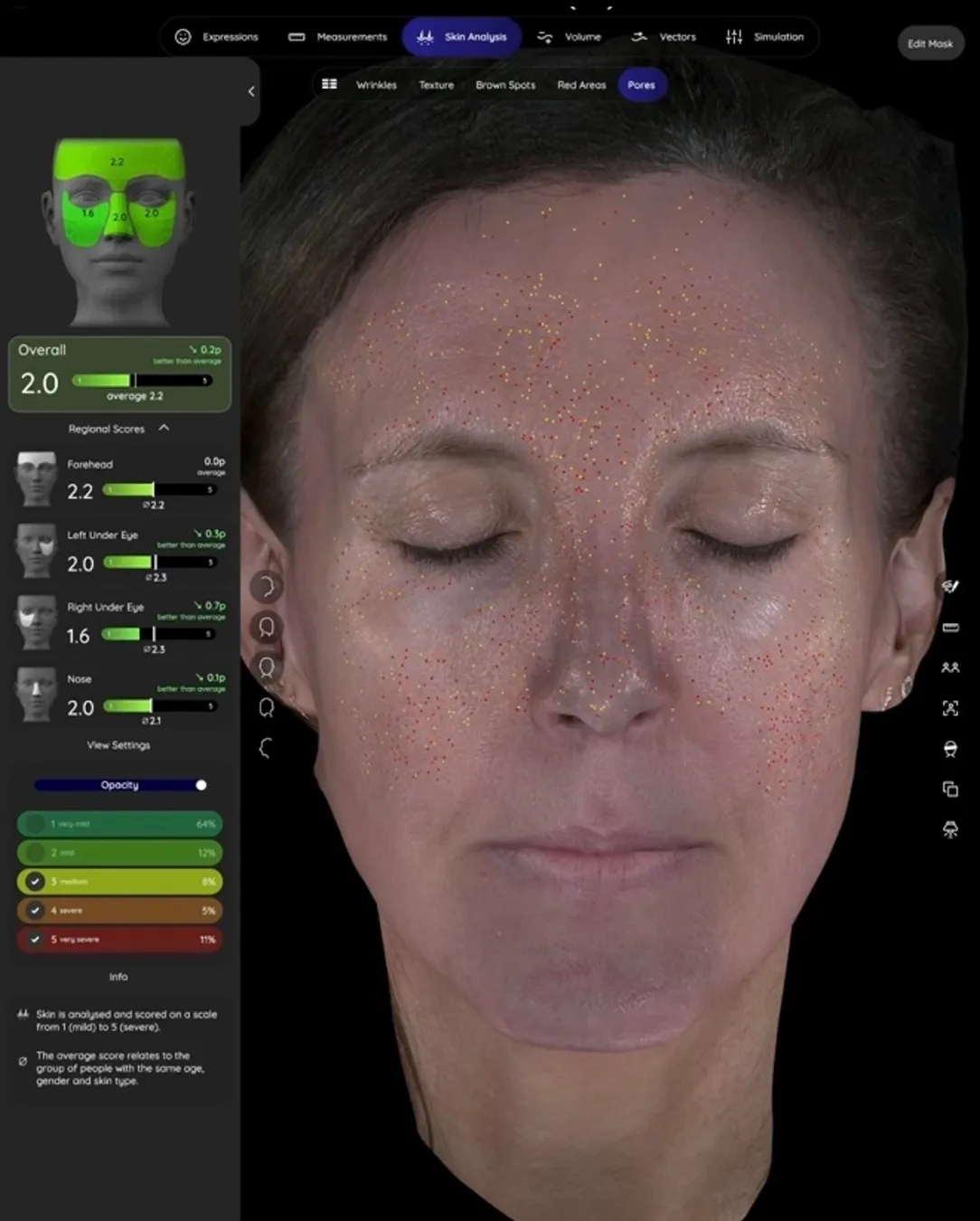
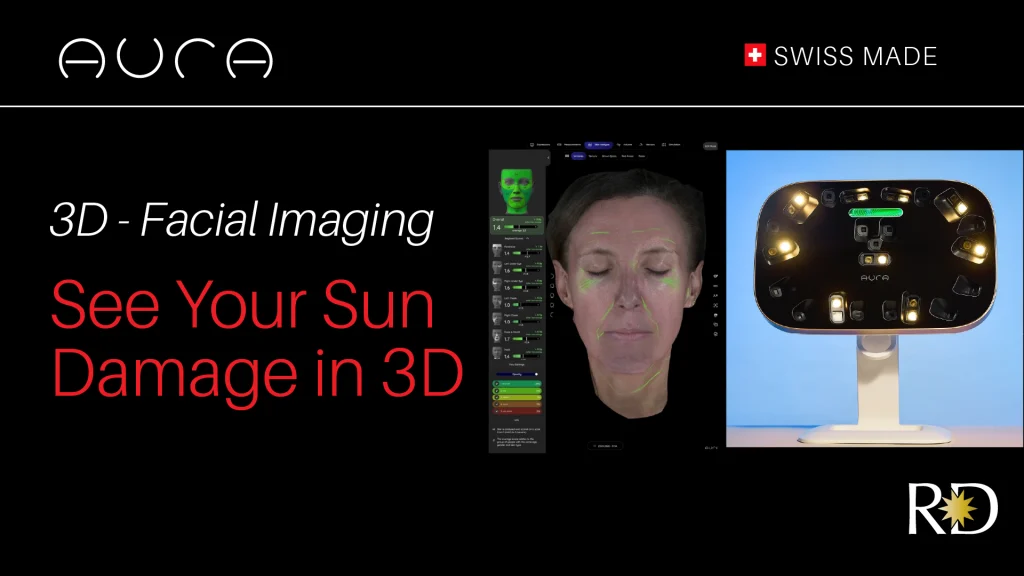
Revival now uses Aura 3D imaging during cosmetic consultations. The system creates a detailed 3D image of the face and highlights sun damage, brown spots, redness, wrinkles, and enlarged pores.
Patients can see exactly where their concerns are concentrated, and providers use those images to build a treatment plan that targets them.
Which Laser Do I Need?
Revival Dermatology’s lasers are listed below from least to most downtime.
| Device | Concerns it addresses | Downtime | Skin types | Typical # of treatments |
|---|---|---|---|---|
| BBL HERO | Sun damage and brown spots, redness and rosacea, broken capillaries, acne, overall tone, anti-aging | Minimal. Treated brown spots darken and flake over about a week. | Types 1–4 (lighter skin types) | Often a series of 3, then maintenance |
| DermaV | Facial redness, rosacea, broken capillaries, spider and leg veins, red scars, brown spots, some tattoo ink | Minimal. Mild redness or swelling, sometimes more swelling for a few days. Normal activities right away. | All skin types | Each treatment takes 5–20 minutes. Varies by concern, but on average 3–5. |
| PicoSure Pro | Hyperpigmentation, melasma, sun spots, texture, pores, fine lines, tattoo removal | Little to none. Redness and slight swelling that mostly fade within 24 hours. | All skin types | Each treatment takes 5–20 minutes. A series determined at consultation, on average 3–4. |
| LaseMD Ultra | Sun damage and age spots, tone and texture, fine lines, overall radiance, actinic keratosis | Mild redness for 24–48 hours. Most activities the next day. | Nearly all skin types | Often 3–5 for best results |
| Halo | Sun damage and discoloration, fine lines and wrinkles, acne scars, enlarged pores | Redness and swelling, then hyperpigmentation and flaking. 3–5 days of social downtime. | All skin types | Resurfacing treatment takes 30 minutes after numbing. Average 1–2 treatments. |
| ProFractional | Acne scars, scar revision, deeper wrinkles, rough texture | Case specific. Redness and swelling, then dryness, flaking, and peeling. Can be 7–10 days. | All skin types | Resurfacing treatment. Average 1–3 treatments, plus annual maintenance. |
| Contour TRL | Deep wrinkles, significant acne scarring, scar revision, advanced sun damage | Warm redness, swelling, and oozing, then flaking and peeling. 7–14 days of social downtime. Full healing in 6–12 weeks. | Determined at consultation | Most aggressive resurfacing treatment. 1–3 rounds, with improvement continuing up to 6 months. |
A few things worth knowing:
- BBL HERO is broadband light (IPL). It isn’t technically a laser, but it treats many of the same concerns and works best on lighter skin types.
- PicoSure Pro is the only picosecond laser FDA-cleared to treat melasma.
- Halo combines ablative and non-ablative treatment in one pass, so it resurfaces more aggressively than Ultra.
- Contour TRL is the most aggressive option and requires strict sun protection for up to three months after treatment.
Individual results vary. A board-certified dermatologist determines the right treatment at consultation.
Not sure which one? That is what the consultation is for, and with Aura 3D analysis Revival Dermatology can show you.
Protecting Your Results
Laser-treated skin is more sensitive to the sun, so daily broad-spectrum sunscreen is part of every treatment plan. Starting in the fall gives skin the cooler, lower-UV months to heal and keeps results from being undone by next summer.
Book a laser consultation at Revival Dermatology’s Dallas office and start the season with a plan.
8201 Preston Rd, Ste 440, Dallas, TX 75225
Phone 214.675.3227
Monday to Friday, 8:30 to 4:30
FAQs About Laser Treatments at Revival Dermatology
Less sun exposure in fall and winter makes it easier for skin to heal and lowers the risk of new pigment forming after treatment.
Most patients feel warmth or a light snapping sensation. Deeper resurfacing treatments like Halo are done after numbing to keep patients comfortable.
Many of Revival’s lasers, including DermaV, PicoSure Pro, and Halo, can treat all skin types. BBL works best on lighter skin. A dermatologist determines the right device at consultation.
Daily broad-spectrum sunscreen is required after any laser treatment. After deeper resurfacing like Contour TRL, strict sun protection is needed for up to three months.
Disclaimer: This article is for educational purposes only and does not replace professional medical advice. Individual results vary. Consult a board-certified dermatologist to determine whether PicoSure is right for you. Before and after photos are provided by Cynosure and do not depict Revival Dermatology patients.